Gainesville FL averages over 52 inches of rain per year and subtropical humidity that never fully lets up. That combination makes mold one of the most common and serious property problems in all of Alachua County. MRGNV is your Florida DBPR licensed mold remediator — on-site fast, done correctly, and fully documented for your insurance claim.
No obligation · Insurance approved · Florida DBPR Licensed
MRGNV was built specifically to solve Gainesville Florida's mold problem. We are not a national franchise with a call center somewhere else taking your call. We are a locally owned, Florida DBPR licensed mold remediation company that has served Alachua County homeowners, landlords, property managers, and commercial clients for over a decade. Every technician who sets foot in your home is licensed, background-checked, and trained to Florida DBPR and IICRC S520 standards.
Gainesville gets called "Rainesville" for a reason. The city receives over 52 inches of rain annually, experiences daily afternoon thunderstorms from June through September, and sits on karst limestone geology that keeps the water table high all year. Older housing stock near the University of Florida campus, from Duck Pond and Duckpond to University Heights and Midtown, was built before modern moisture barriers became standard. Newer subdivisions like Haile Plantation and Tioga deal with crawl space humidity from a water table that never fully drops. Everywhere in Alachua County, the conditions are right for mold to establish quickly after any moisture event.
We know this market. We know which neighborhoods flood after 2 inches of rain in an hour. We know the attic construction styles common to homes built near campus in the 1950s and 1960s. We understand Florida's strict DBPR licensing laws, and we know exactly how to document a job to support your insurance claim. That combination of local knowledge and professional rigor is the difference between getting this right once and dealing with regrowth within a single rainy season.
Mold removal and remediation is our single focus. Every service is performed by Florida DBPR licensed technicians following IICRC S520 and EPA mold remediation guidelines.
Stachybotrys chartarum, commonly called black mold, produces trichothecene mycotoxins that cause serious respiratory illness, chronic fatigue, and neurological symptoms with prolonged exposure. Gainesville's persistent humidity and frequent storm flooding create ideal conditions for Stachybotrys to colonize drywall, wood framing, and paper-faced insulation. MRGNV contains, removes, and treats every affected surface to EPA and IICRC S520 standards. Post-remediation lab testing by an independent licensed assessor confirms clearance before anyone re-enters the space. Stachybotrys is never considered remediated without that independent clearance report.
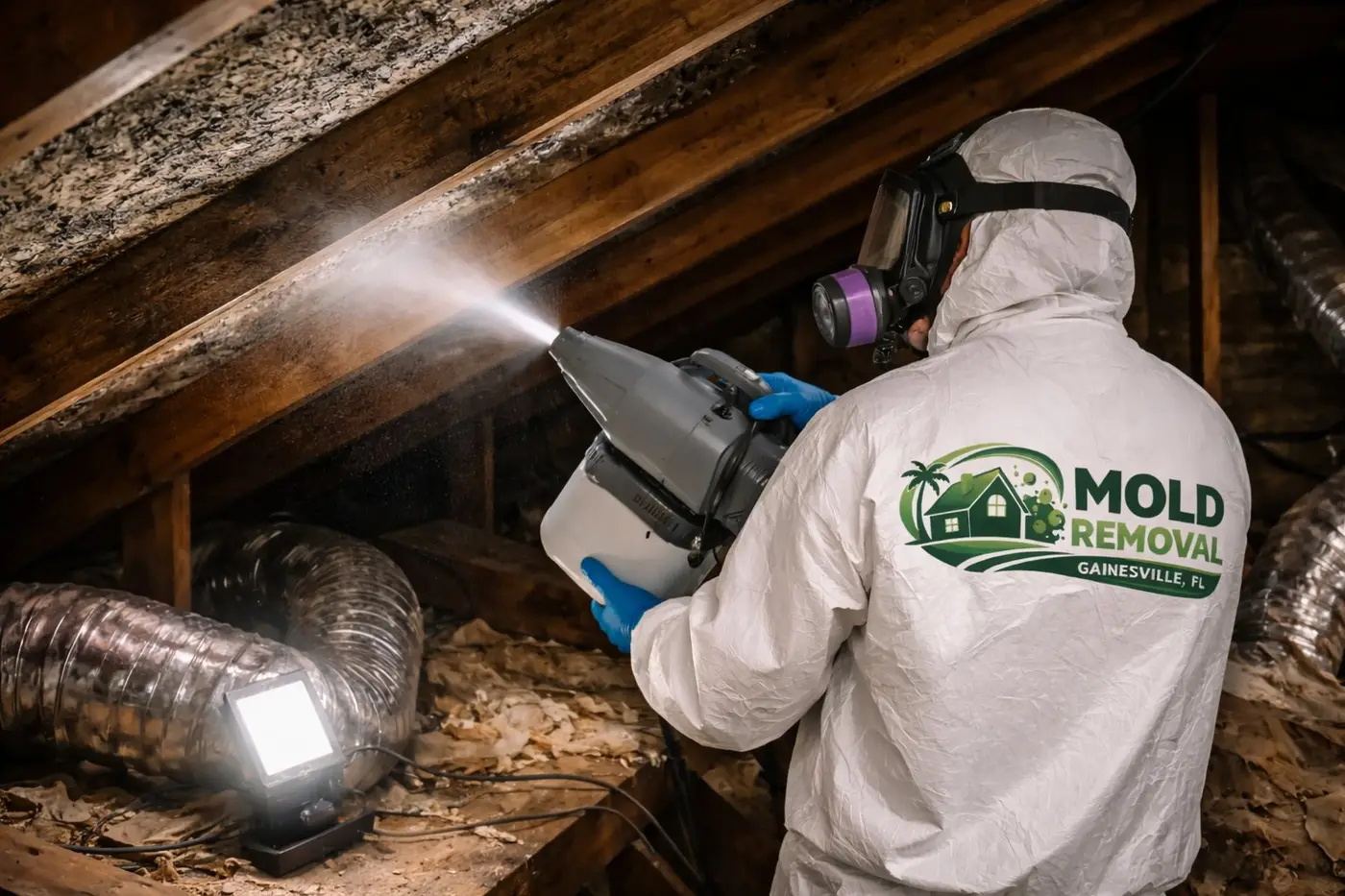
Attic mold is the most common type of mold job we handle in Gainesville and across Alachua County. Tropical storms punch holes in roofing, or ridge vents and soffit vents become blocked, and the combination of heat and moisture inside Gainesville attics creates a perfect environment for Cladosporium and Aspergillus to spread across roof decking and rafters within days. We treat the active mold colony, correct the ventilation or moisture source that allowed it to establish, and apply an IICRC-approved mold inhibiting encapsulant. In Gainesville's climate, ventilation correction is not optional — it is the only thing preventing regrowth after the next summer storm season.
Alachua County's karst limestone geology keeps the water table elevated year-round. Crawl spaces in Gainesville homes regularly accumulate moisture from soil vapor even without a plumbing leak or flooding event, especially during and after the June through September rainy season. We remove mold from floor joists, subfloor decking, and crawl space walls, then install a 20-mil vapor barrier and crawl space encapsulation system specifically engineered for North Central Florida's soil moisture conditions. The vapor barrier is not a cosmetic fix. It is a permanent moisture management system that interrupts the vapor drive from the soil to your structure and prevents mold from recolonizing after every wet season.
Air conditioning runs nearly year-round in Gainesville. The inside of air handlers, evaporator coils, and supply ductwork stays consistently cool and slightly damp, which makes HVAC systems one of the most overlooked but most significant mold sources in Florida homes. When mold grows in your air handler or ducts, every time your AC cycles on it distributes spores to every room in your home. We perform complete HVAC mold remediation including the air handler cabinet, evaporator coil, and accessible ductwork, and we coordinate post-service air sampling to verify clean air quality throughout your system before you run it again.
Gainesville's baseline humidity makes bathroom and kitchen mold a near-certainty when exhaust ventilation underperforms or a slow plumbing leak develops behind tile or under a cabinet. We remove contaminated drywall and treat structural framing, sanitize all surfaces with EPA registered antimicrobials, and verify complete clearance before closing up the space. Painting over mold with antimicrobial paint or applying a surface spray is not remediation. In Gainesville's climate, those approaches fail within one rainy season. We eliminate the colony and the moisture source together.
When floodwater from Paynes Prairie storms, tropical systems, or rising Alachua County waterways enters your home, mold can begin growing on wet drywall and wood framing within 24 to 48 hours. Most water removal companies dry out structures but do not perform licensed mold remediation. MRGNV specializes in post-flood mold treatment, identifying and eliminating colonies both before and after they become visible. Every job is fully documented to support your NFIP flood insurance claim with the DBPR-compliant reports that Florida adjusters require.
Commercial mold in Gainesville affects offices, retail spaces, restaurants, student housing complexes, apartment buildings, and medical facilities. Florida law applies the same DBPR licensing requirements to commercial mold jobs as residential ones. MRGNV works after hours and on weekends to minimize business disruption, provides full DBPR-compliant documentation, and coordinates directly with your insurance carrier and, when applicable, with commercial property managers and HOA boards representing Gainesville apartment complexes and student housing properties near UF.
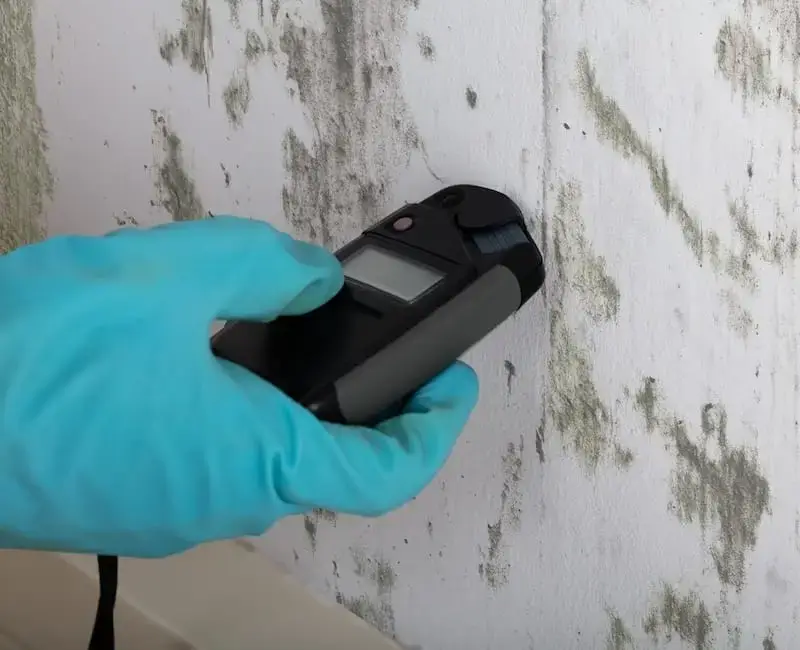
Mold insurance claims in Florida are frequently disputed. Carriers routinely argue that mold resulted from long-term humidity or maintenance neglect rather than a sudden covered event, even when the timeline clearly shows otherwise. MRGNV builds a detailed DBPR-compliant documentation package from the first moment on site — moisture readings, thermal imaging data, lab analysis, photographic evidence, and a written remediation report. This documentation is the difference between a paid claim and a denied one. We communicate directly with your adjuster throughout the process so you are not navigating the insurance system alone during an already stressful situation.
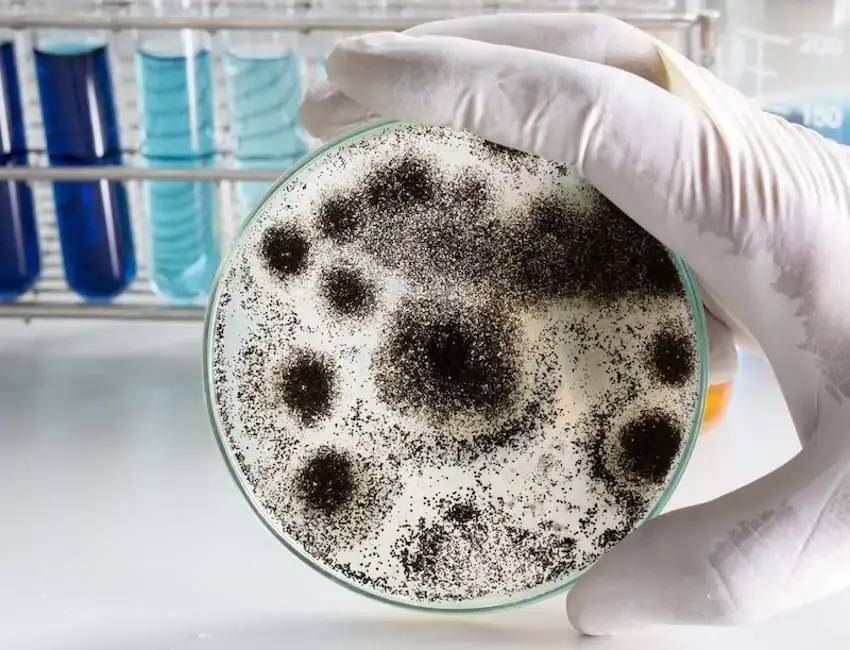
Florida law requires that the company performing mold remediation and the assessor performing post-remediation verification be two separate licensed entities. MRGNV performs remediation only. After our work is complete, we coordinate with an independent Florida licensed mold assessor who collects air and surface samples, sends them to an accredited laboratory, and issues a clearance report when indoor spore concentrations meet IICRC target levels relative to outdoor controls. This independent clearance report is the document your insurance company needs, the document a real estate buyer's agent will require, and the legal protection you need if anyone ever questions whether the mold in your Gainesville home was properly and completely remediated.
Real jobs completed across Alachua County. Every property returned to certified, lab-cleared, mold-free condition.
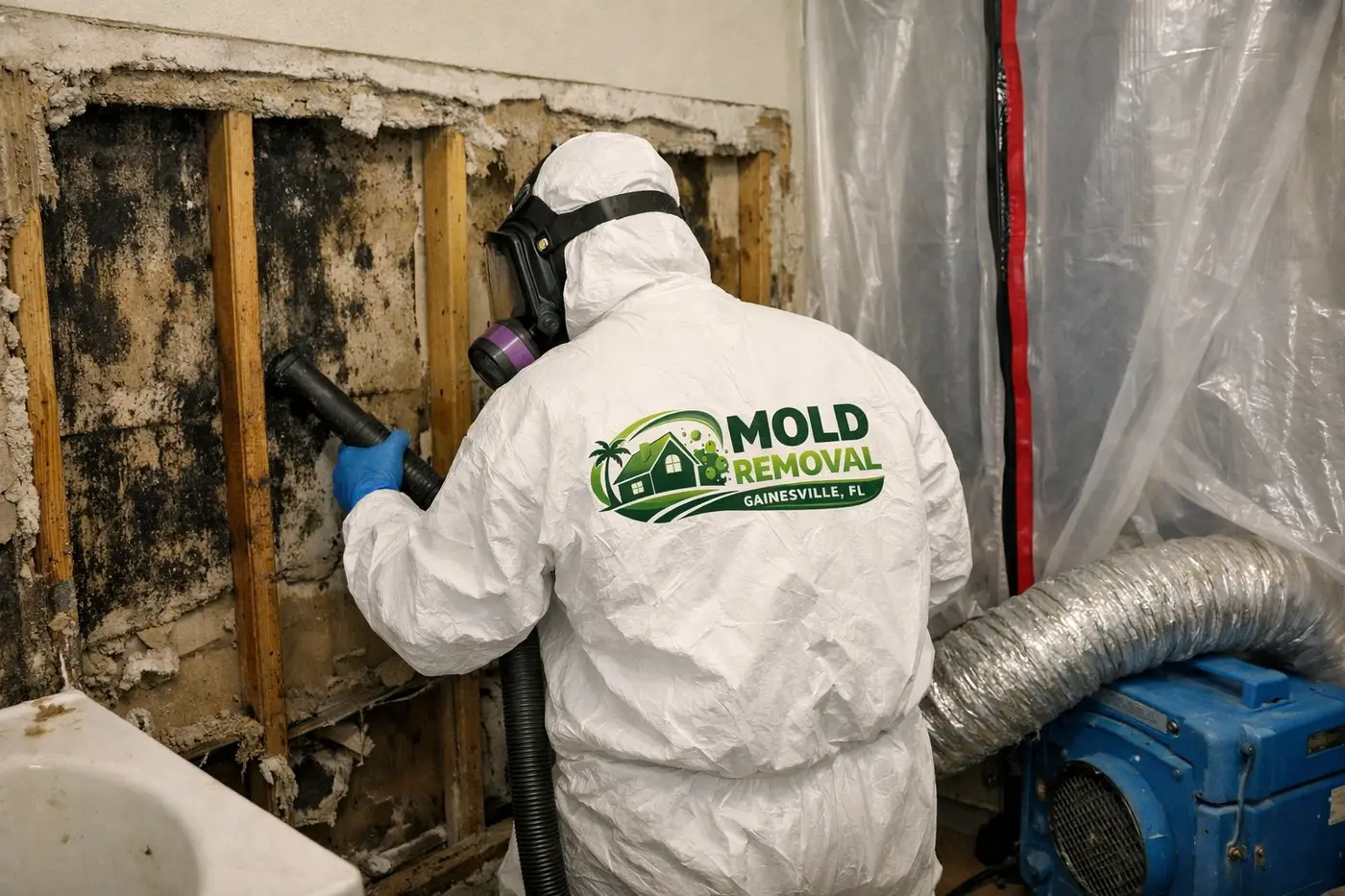
Severe Stachybotrys growth on bathroom walls and tub surround from a slow pipe leak. Full containment, drywall removal, framing treatment, antimicrobial application. Independent lab clearance passed first test.
Attic mold on rafters and decking from poor ventilation and storm moisture. Full attic mold removal, insulation replacement, antimicrobial treatment, and ridge ventilation correction. Clearance test passed.
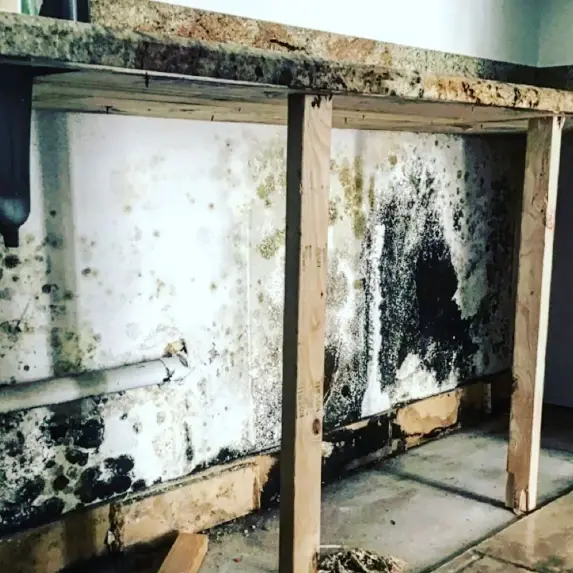
Severe green and black mold on concrete walls and floor joists from flooding and standing water. Complete mold remediation, structural drying, antimicrobial treatment. Surface restored and cleared by independent assessor.
Every MRGNV job follows the same proven protocol from initial call to independent lab clearance. No shortcuts, no steps skipped.
You call (352) 703-8287. A real person answers. We schedule same-day or next-morning arrival anywhere in Alachua County. No voicemail, no call center, no waiting 48 hours for a callback.
Florida law requires a licensed mold assessor to identify the mold species, map the contamination area, and write a remediation protocol before work begins. We connect you with a licensed independent assessor if you do not have one, or we work from your existing assessment report.
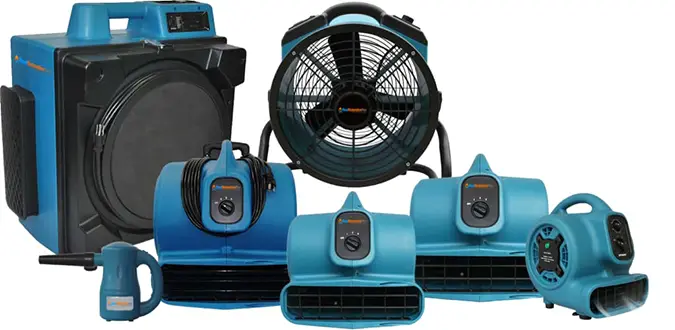
We isolate the affected area with poly barriers and maintain negative air pressure using commercial HEPA-filtered air scrubbers. This prevents mold spores from migrating to unaffected rooms during remediation. Containment is not optional on any job over 10 square feet.
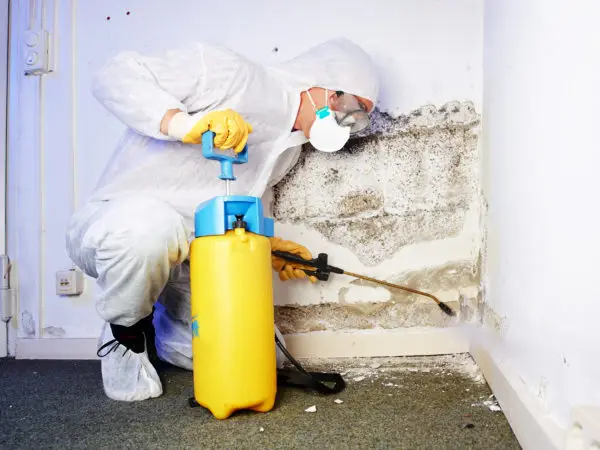
Contaminated materials are removed, HEPA vacuumed, and treated with EPA registered antimicrobials. Structural framing is wire-brushed and treated. We apply mold inhibiting encapsulants to remaining surfaces per IICRC S520 protocol. All contaminated material is bagged and disposed of per Florida regulations.
Mold without moisture correction always returns in Gainesville's climate. We identify and address every moisture source whether that means attic ventilation correction, crawl space vapor barrier installation, HVAC condensate drainage repair, or coordination with a licensed plumber. We do not sign off on any job until the source is resolved.
A separate Florida licensed mold assessor collects post-remediation air and surface samples. Lab results confirm that spore concentrations have returned to normal relative to outdoor controls. You receive a signed lab clearance report. Florida law requires this separation of roles and MRGNV follows it on every single job.
Not all mold looks the same and not all mold carries the same level of health risk. Here are the mold species our technicians encounter most often across Alachua County and what each one means for your home and your family.
Stachybotrys is the species most people mean when they say black mold. It is dark greenish black in color and has a slimy texture when actively wet. It grows only on materials that have been continuously wet for an extended period, which is why it appears in Gainesville homes after flooding, sustained roof leaks, or slow pipe drips that went undetected for weeks. Stachybotrys produces trichothecene mycotoxins, specifically satratoxin G and H, which inhibit protein synthesis in human cells. Health effects from prolonged exposure include respiratory distress, chronic fatigue, headaches, neurological symptoms, and in severe cases in immunocompromised individuals, pulmonary hemorrhage. Stachybotrys is almost always a tertiary colonizer, meaning it appears after Penicillium and Cladosporium have already established in the same location. If you have Stachybotrys, you almost certainly have other mold species in the same area that require remediation as well.
Aspergillus and Penicillium species are the most common indoor molds in Florida and the first to colonize water-damaged building materials in Gainesville homes. They appear in colors ranging from green and blue-green to white and yellow, and they grow quickly on drywall, wood, insulation, and HVAC components. Some strains of Aspergillus produce aflatoxins and other mycotoxins that cause allergic reactions, asthma attacks, and in cases of heavy prolonged exposure, more serious respiratory conditions. In Florida, Aspergillus-related hypersensitivity pneumonitis is documented in patients with chronic indoor exposure to water-damaged buildings. Gainesville's year-round humidity means that once Aspergillus or Penicillium colonies establish in an HVAC system or attic space, they can continue distributing spores throughout a home for months without any visible mold growth in the living areas.
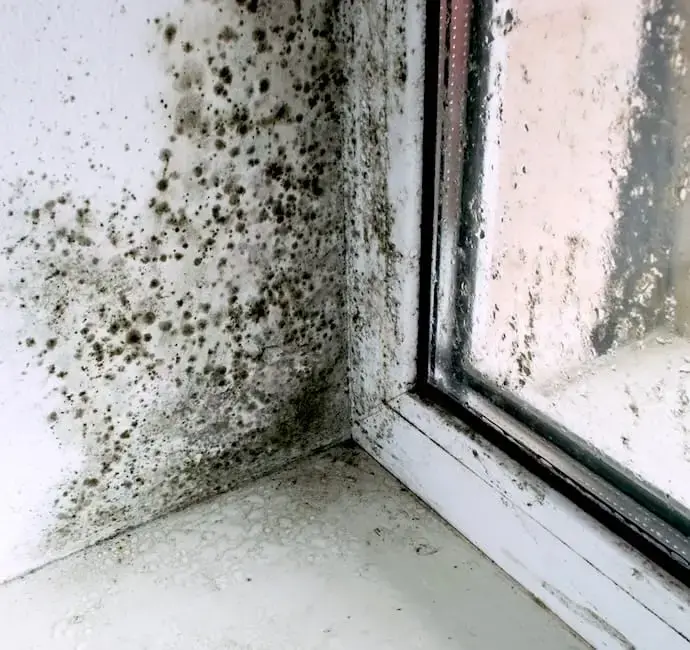
Cladosporium is the most prevalent indoor and outdoor mold species in North Central Florida and one of the two most common airborne mold allergens in the country alongside Alternaria. It appears olive green to black and colonizes surfaces including window frames, bathroom grout, HVAC ducts, and attic wood decking. Cladosporium itself does not produce mycotoxins, but it is a powerful allergen and a documented trigger for asthma attacks, allergic rhinitis, and hypersensitivity reactions. In Gainesville, outdoor Cladosporium spore counts peak dramatically after summer rainstorms when the surrounding forests and Paynes Prairie's 21,000 acres of decomposing organic material release billions of spores into the air. When that outdoor spore load combines with indoor moisture, Cladosporium establishes in homes quickly and at scale.
Chaetomium is a dark brown to black mold that thrives on cellulose-based materials in chronically damp conditions. It is commonly found in Gainesville homes with long-term moisture problems behind drywall and under flooring. Chaetomium produces chaetoglobosins, mycotoxins associated with neurological effects in immune-compromised individuals, and it is particularly common in Gainesville rental properties near UF where maintenance deferred over years creates conditions of persistent building moisture. Fusarium is another species we encounter in Gainesville crawl spaces and in soil-contact wood framing. Some Fusarium strains produce trichothecene and zearalenone mycotoxins. Both species indicate long-term moisture conditions and their presence in a Gainesville home often signals that the building's moisture history goes back further than a single weather event.
Gainesville's subtropical climate means mold exposure is not a rare occurrence. Understanding the health effects helps you recognize when indoor mold is the cause of symptoms your family cannot explain.
Here are the actual mold removal companies operating in Gainesville and Alachua County right now, and how MRGNV stacks up on the factors that matter most for your home, your health, and your insurance claim.
| What Matters | Dreyer's DKI · The Best Restoration · PuroClean · Paul Davis · United Water Restoration · Mold Solutions GNV | ✅ MRGNV — Mold Removal Gainesville FL |
|---|---|---|
| Florida DBPR Licensed Mold Remediator | Varies — national franchise brands often subcontract to local crews whose licensing status is not uniformly verified | ✓ Every MRGNV technician holds an active FL DBPR license — verifiable at myfloridalicense.com |
| Mold Removal as Primary Focus | ✗ Dreyer's DKI, The Best Restoration, PuroClean, and Paul Davis all provide water, fire, and storm restoration — mold is one of many services | ✓ Mold removal and remediation in Gainesville FL is our single specialty and our only business |
| Locally Owned and Operated | ✗ Paul Davis, PuroClean, and United Water Restoration operate under national franchise agreements and are not locally owned or controlled | ✓ Locally owned, Gainesville based, founded and operated in Alachua County for 10+ years |
| Independent Post-Remediation Testing | Sometimes offered but often skipped or performed by the same entity — a violation of Florida law on jobs over 10 sq ft | ✓ Always coordinated with a separate independent licensed FL mold assessor as required by Florida Statute 468.8419 |
| HEPA Negative Air Pressure on Every Job | Not consistently applied — particularly on smaller jobs at franchise locations where cost pressure encourages shortcuts | ✓ Commercial HEPA-filtered negative air pressure containment on every single job regardless of size |
| Moisture Source Correction Included | ✗ Most companies remove visible mold and leave. In Gainesville's climate, mold returns within one wet season without moisture correction | ✓ We identify and address the moisture source as part of every job — attic ventilation, vapor barriers, HVAC drainage, or plumbing referral |
| Full Insurance Claim Advocacy | Basic remediation reports provided — few companies actively communicate with adjusters or push back on disputed claims | ✓ Complete DBPR-compliant documentation package and direct adjuster communication on every insurance-involved job |
| Gainesville-Specific Market Knowledge | Most national and statewide brands serve Florida broadly — limited understanding of Alachua County's specific geology, housing stock, and neighborhood-level risk factors | ✓ 10+ years serving every Gainesville neighborhood, from Duck Pond to Haile Plantation to the UF campus area |
Remediation fixes mold after it grows. Prevention is what keeps it from growing back in Gainesville's climate. These are the most effective and practical measures for Alachua County homes.
The CDC and Florida Department of Health both recommend keeping indoor relative humidity below 60 percent to suppress mold growth. In Gainesville, where outdoor humidity regularly exceeds 90 percent during summer storms, this requires running your air conditioning consistently even when temperatures feel mild. A properly sized and functioning HVAC system is your primary tool for humidity control in a Florida home. Portable dehumidifiers are useful supplements in enclosed spaces like storage rooms and closets that receive limited conditioned air. Keep your HVAC drain pan clean and your condensate line clear — a blocked condensate line is one of the most common sources of hidden moisture in Gainesville homes and a frequent precursor to HVAC system mold.
For any Gainesville home with a pier and beam foundation, crawl space encapsulation is not optional — it is essential. Alachua County's karst limestone geology means ground moisture is always present beneath your home, even in drought conditions. A 20-mil polyethylene vapor barrier installed across the crawl space floor and walls interrupts the vapor drive from soil to structure. Paired with a commercial-grade dehumidifier set to maintain humidity below 55 percent in the crawl space, encapsulation is the single most effective long-term mold prevention investment for a North Central Florida home. Without it, crawl space joist mold is essentially a recurring inevitability across the life of the building.
Gainesville's heat and humidity create severe condensation risk in under-ventilated attics. Properly sized soffit and ridge vents create the through-air movement that prevents moisture from accumulating on roof decking. Make a habit of inspecting your attic space after every major tropical storm or heavy rainfall event. Any roof penetration — nail pops, flashing failures, damaged shingles — allows storm water into the attic space where it can establish mold on decking and rafters within 48 hours. Gainesville homeowners should also ensure that bathroom exhaust fans vent outside the structure, not into the attic cavity. A bath fan exhausting into the attic is a direct and continuous humidity source for attic mold and one of the most common installation errors we find in Gainesville homes built before 1990.
In Florida, HVAC systems run nearly year-round. Quarterly HVAC maintenance — including cleaning the evaporator coil, clearing the condensate drain line, checking for ductwork leaks, and replacing filters — is the minimum maintenance standard for Gainesville's climate. A dirty evaporator coil stays damp during cooling cycles and becomes a mold growth surface that continuously distributes spores through your supply ductwork. Many HVAC technicians in Gainesville will note mold on a coil during a service visit but will not be licensed to remediate it. If your HVAC technician finds mold, that finding should be referred to a licensed FL DBPR mold remediator before the system is run again.
Gainesville experiences significant tropical weather activity from June through November. Every storm that brings wind-driven rain, flooding, or roof damage is a potential mold origin event. After any storm that brought standing water inside your home, saturated the attic, or left any building material wet for more than 24 hours, contact a licensed mold assessor within 72 hours. You do not need to wait for visible mold to appear. By the time mold is visible in a Gainesville home after a flood event, the colony has typically been growing for at least 48 to 72 hours and has already spread beyond what the eye can see. Early professional assessment prevents a contained moisture event from becoming a full remediation project.
Slow plumbing leaks are the most common cause of hidden wall mold in Gainesville homes. A pinhole leak in a supply line inside a wall or under a sink cabinet can leak continuously for weeks before it becomes visible. In Gainesville's ambient humidity, even a minor drip keeps drywall and framing perpetually damp enough to sustain mold growth. Test your water pressure, monitor your water meter for unexplained usage, and inspect under-sink cabinets and around appliances monthly. Older neighborhoods near UF with aging cast iron or galvanized plumbing — Duck Pond, Duckpond, and University Heights in particular — should treat any unexplained musty odor as a potential slow leak signal and have the area assessed before the problem scales.
Transparent pricing ranges for mold remediation jobs in Gainesville FL and Alachua County. Every job is priced individually based on scope.
MRGNV responds to mold removal and remediation calls throughout Gainesville Florida and surrounding Alachua County communities. Same-day response for most locations.
Gainesville consistently ranks among the top five most flood-prone cities in the continental United States. Alachua County receives over 52 inches of rain annually, experiences daily afternoon thunderstorms throughout the June to September rainy season, and sits on a karst limestone substrate that keeps the water table elevated year-round. The city's subtropical humidity rarely drops below 60 percent even in the driest months of the year. The University of Florida's own housing department acknowledges this reality by calling Gainesville "Rainesville" in official student materials and providing explicit mold prevention guidance to residents. These are not isolated weather events. They are the permanent baseline conditions that every property owner in Alachua County must manage actively and continuously.
Gainesville FL receives more annual rainfall than Miami, Tampa, and Orlando. The summer rainy season brings daily storms that saturate soil, flood low-lying areas near Paynes Prairie, and drive moisture into foundations, crawl spaces, and roof systems. Any building material that stays wet for more than 48 hours in Florida's heat is at serious risk of mold colonization.
Gainesville's relative humidity stays above 70 percent for most of the year and regularly exceeds 90 percent during summer storm events. This level of ambient moisture means that a minor roof leak, a condensation problem, or poor HVAC drainage that would naturally dry out in a lower humidity climate becomes a persistent mold problem in Alachua County without active intervention.
Gainesville's most desirable historic neighborhoods — Duck Pond, Duckpond, Midtown, and University Heights — contain homes built from the 1930s through the 1970s. This construction predates modern vapor barriers, properly sealed crawl spaces, and current attic ventilation standards. These homes were not engineered for Florida's current climate conditions and create chronic mold vulnerability that newer construction attempts to address with better building science, though not always successfully.
Alachua County's underlying karst limestone creates a high water table and significant soil moisture even during relatively dry periods. This geological reality keeps crawl spaces and foundation walls in contact with moisture throughout the year regardless of rainfall. Without properly installed and maintained vapor barriers and crawl space drainage systems, crawl space mold is essentially a structural inevitability for older Gainesville homes on pier and beam foundations.
These are the mold situations we respond to across Gainesville and Alachua County every week. If any of these match what you are experiencing right now, call us today.
Gainesville gets hit directly by tropical weather multiple times every summer. A single roof penetration during a storm allows moisture into attic decking and rafters, and mold colonies can establish within 48 hours in Florida's heat. What looks like a small dark patch is often a much larger colony once you get behind the insulation. Attic mold also distributes spores into your living space through recessed lighting, ceiling penetrations, and HVAC supply registers. We perform full attic mold removal, correct the ventilation or moisture source, and coordinate clearance testing so the problem does not return after the next storm season.
Chronic unexplained symptoms in otherwise healthy people are one of the most common reasons Gainesville homeowners call us. Hidden mold growing inside walls, behind bathroom tile, or in HVAC systems exposes occupants to a continuous stream of mycotoxins and spores with no visible evidence. Because Gainesville already has one of the highest outdoor allergen loads in the Southeast due to surrounding forest and Paynes Prairie, mold-related symptoms are routinely misidentified as pollen allergies for months. We have found extensive hidden mold in homes where other companies gave clean visual inspections. An independent licensed assessor with air sampling equipment can tell you with certainty whether your indoor air quality is the source of what your family is experiencing.
Florida landlord-tenant law requires property owners to maintain rental units free of conditions that materially affect the health and safety of tenants. Active mold growth qualifies as such a condition under Florida Statutes. A tenant who reports mold and does not receive prompt professionally documented remediation may have legal grounds to terminate the lease, withhold rent, or pursue a civil claim. MRGNV has worked with dozens of Gainesville landlords and property managers to address mold quickly, correctly, and with the DBPR-compliant documentation that protects the landlord's legal standing if any future dispute arises over the adequacy of the remediation.
Mold discovered during a real estate transaction in Gainesville's active housing market requires fast, properly documented remediation. Buyers will not close without a certified clearance report. Sellers need a DBPR-compliant remediation report and independent clearance to demonstrate to the buyer's agent and underwriter that the issue was professionally resolved by a licensed Florida remediator. MRGNV handles real estate mold jobs specifically with the timeline pressure and documentation standards that Gainesville's competitive market demands, coordinating directly with buyers, sellers, real estate agents, and title companies when needed.
A musty odor combined with soft or springy flooring is a serious warning in a Gainesville home. This combination almost always indicates active mold growth on floor joists and subfloor decking from groundwater or crawl space moisture accumulation. The softness suggests the wood has already begun to rot, meaning structural material has been compromised. In Alachua County's climate, this type of crawl space damage is progressive — it does not stop or slow down on its own. We assess the full extent of the mold and structural damage, remediate the mold colony, coordinate any necessary structural repairs, and install a permanent vapor barrier system that addresses the groundwater moisture driving the problem.
An HVAC technician who finds mold on a coil or in an air handler cabinet is not licensed in Florida to perform mold remediation on anything over 10 square feet. Cleaning the coil without containing the mold and treating the full extent of the colony inside the air handler and connected ductwork simply redistributes spores throughout your home. MRGNV performs complete HVAC mold remediation per Florida DBPR standards, then coordinates post-remediation air sampling to verify clean air quality before the system runs again. If your HVAC tech has found mold, call us before you run your air conditioning again.